


Hard Water Is Destroying Your Appliances and Pipes Faster Than You Think
Northwest Houston’s municipal water supply carries 120 to 180 parts per million of dissolved calcium and magnesium, hard to very hard by the U.S. Geological Survey’s classification. Most homeowners in Tomball, Cypress, Spring, and Conroe are aware that they live in a hard water area. Far fewer understand what that specific hardness level is actually doing to their water heater, dishwasher, washing machine, supply pipes, and energy bill on a measurable, quantifiable basis. The Water Quality Research Foundation estimates that hard water costs the average affected household approximately $800 per year. That number includes premature appliance failure, elevated energy bills from scale-insulated heating elements, extra cleaning products, and plumbing maintenance. This blog explains the specific damage mechanisms, the equipment most at risk in your home, and why the timeline for this damage is much shorter than most homeowners assume.
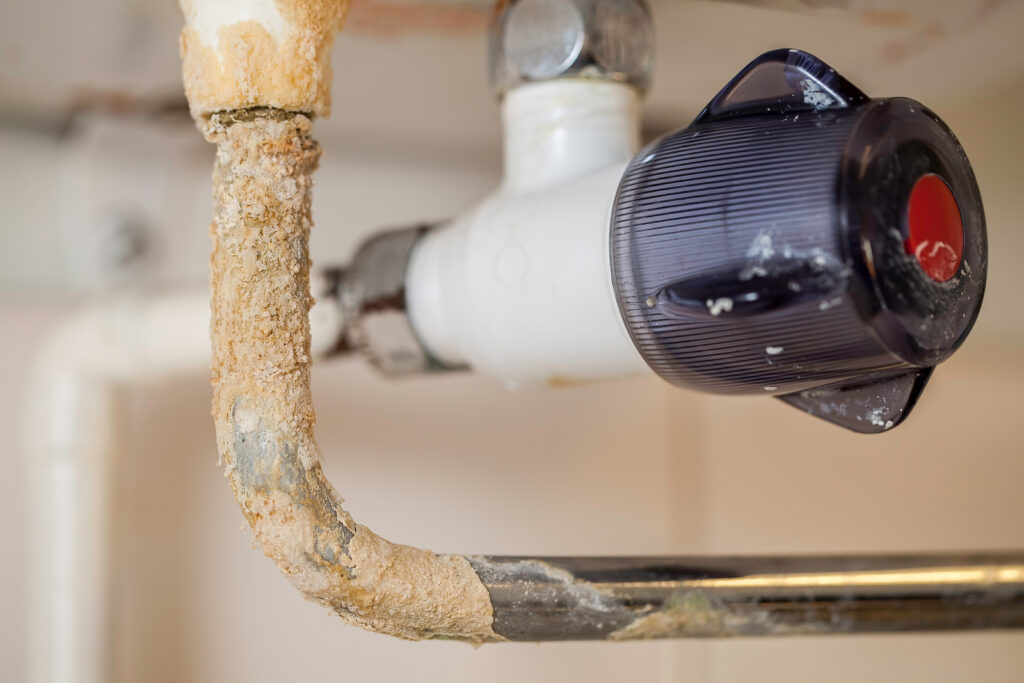
Hard water silently damaging your appliances and pipes? Call Edmond’s Rooter-Man Plumbers at 281.351.4422 for water treatment system consultation and installation throughout Tomball and Northwest Houston.
What Hard Water Is and Why Northwest Houston’s Level Matters
Hard water is water that carries elevated concentrations of dissolved calcium and magnesium, typically acquired as groundwater percolates through limestone and chalk deposits in the soil and rock above aquifers. The USGS Water Science School classifies water above 121 ppm as hard and water above 180 ppm as very hard. At 120 to 180 ppm, 7 to 10.5 grains per gallon, Northwest Houston’s water sits in the moderate-to-high hardness range where appliance and pipe damage is documented and measurable rather than theoretical.
The chemistry behind hard water damage centers on a property of calcium carbonate called inverse solubility. Unlike most dissolved substances, which become more soluble as temperature increases, calcium carbonate becomes less soluble as water gets hotter. This means that wherever water is heated, inside a water heater, on a dishwasher heating element, through a washing machine hot cycle, calcium and magnesium leave solution and deposit on the surrounding surfaces. This is why hot-water appliances are damaged so much faster than cold-water fixtures connected to the same supply line.
Every hot water appliance in your home is a calcium carbonate deposition machine running continuously. The rate of deposition is directly proportional to water temperature and hardness level. At Northwest Houston’s hardness level, the Battelle Memorial Institute documented approximately 0.4 pounds of scale accumulation per year in electric water heaters, a rate that produces roughly 4 pounds of accumulated scale in a 10-year-old tank with no annual maintenance.
What Hard Water Does to Your Water Heater: The Highest-Stakes Damage
Water heaters bear the most severe hard water damage of any residential appliance because they operate at sustained high temperatures throughout the day and maintain a large volume of heated water in direct contact with their interior surfaces. The U.S. Department of Energy notes that water heating accounts for approximately 17 to 20 percent of household energy costs, making efficiency losses from scale a meaningful ongoing budget impact.
Scale accumulates at the tank bottom and on electric heating elements at a rate determined by water temperature and hardness. Every 1/16 inch of scale on a heating element reduces its efficiency by 11 percent. At quarter-inch scale accumulation, reached in as few as 5 to 7 years without flushing in Northwest Houston’s hard water conditions, energy consumption has increased by 44 percent or more above the unit’s rated efficiency. The element works harder and runs longer to transfer the same amount of heat through the insulating mineral layer.
The lifespan impact is equally significant. Water heaters operating on soft or treated water regularly reach 10 to 15 years of reliable service. Water heaters in Northwest Houston’s untreated hard water without annual maintenance typically fail at 6 to 8 years. Research from the Water Quality Research Foundation found that 75 percent of water heaters in hard water areas fail before their expected lifespan. For a household that replaces a water heater at 8 years instead of 13, the accelerated replacement cost over 30 years of homeownership represents a meaningful financial difference that compounds with energy bills paid throughout that shorter service life.
Dishwashers, Washing Machines, and Kitchen Appliances
Dishwashers
A dishwasher’s wash cycle sprays hot water through spray arms at high velocity to clean dishes. In hard water, each cycle deposits mineral scale on spray arm nozzles, gradually clogging and redirecting the spray pattern. The dishwasher heating element that dries dishes accumulates scale at the same rate as a water heater element, reducing drying efficiency and consuming more electricity per cycle. The cloudy film on glasses and dishes that dishwasher detergent can’t resolve is calcium stearate, the compound formed when calcium-rich water reacts with soap, leaving a film that no amount of better detergent resolves because the problem is upstream of the machine.
Washing Machines
Washing machines are affected by hard water on two fronts: the mechanical components and the laundry output. Mineral scale deposits on water inlet valve screens, reducing flow to wash cycles and eventually causing valve failure. Rubber seals around drum bearings and valve mechanisms harden and crack faster in hard water environments. The Water Quality Research Foundation documented washing machine lifespans 30 to 40 percent shorter in hard water areas compared to soft water households. Simultaneously, the laundry coming out of these machines carries mineral-soap residue that makes whites appear dingy and fabrics feel stiff.
Coffee Makers and Small Appliances
Coffee makers, electric kettles, and humidifiers operate at temperatures where calcium carbonate precipitates rapidly. Scale buildup in heating chambers reduces heating efficiency, extends cycle times, and eventually produces blockages that prevent normal operation. The thermal stress on heating elements surrounded by scale, running hotter and longer to compensate, reduces component life more rapidly than the scale buildup alone. Most coffee maker manufacturers recommend descaling every one to three months in hard water areas, a maintenance requirement directly tied to the hardness of the incoming water supply.
What Hard Water Does to Your Supply Pipes
The American Water Works Association documents that scale can reduce flow in a half-inch supply pipe by up to 75 percent within five years in very hard water areas. While Northwest Houston’s 120 to 180 ppm hardness is in the moderate-high range rather than the extreme range where this maximum reduction occurs, the progressive narrowing of supply pipe interiors is a documented condition in the region’s pre-2000 housing stock. Homes in Copperfield, Fairfield, Canyon Lakes West, and other 1980s Cypress and Northwest Houston communities with original galvanized steel or aging copper supply lines experience this narrowing as a gradual reduction in whole-home water pressure that develops so slowly that homeowners attribute it to aging infrastructure rather than identifying it as scale that a water treatment system could prevent.
The scale narrowing process is irreversible in most pipe configurations, existing scale cannot be eliminated without physical pipe cleaning or replacement. A water softener stops new scale accumulation immediately and gradually dissolves the existing scale over months as softened water circulates through the system. Homes with significant existing scale that install a water softener will see gradual pressure improvement as the softened water dissolves existing deposits, with the rate depending on scale thickness and pipe configuration.
The Annual Cost Breakdown: What Untreated Hard Water Costs Northwest Houston Homeowners
Understanding the financial impact of untreated hard water requires adding up the compounding costs across multiple categories simultaneously:
- Energy bills: Scale-insulated water heater elements consume 24 to 48 percent more electricity. At 17 to 20 percent of household energy costs dedicated to water heating, this translates to a meaningful monthly utility premium for the entire time the scale accumulates.
- Premature appliance replacement: A water heater replaced at 8 years instead of 14 represents one additional replacement per 30-year homeownership period. At $900 to $1,500 for a tank water heater, this is a direct cost. A washing machine replaced at 7 years instead of 12 adds another replacement cost amortized across the homeownership period.
- Cleaning products: Households in hard water areas consistently use 30 percent more cleaning products to achieve the same cleaning results, detergents, rinse aids, descaling products, and specialty cleaners for hard water residue. These add approximately $200 to $400 per year above what soft water households spend.
- Plumbing maintenance: Scale buildup in aerators, showerhead flow restrictors, and fixture cartridges requires more frequent professional service. Hard water-related plumbing repairs from scale-accelerated failures average $5,000 per event nationally, with severe cases requiring complete repiping at costs that can reach $15,000.
The Water Quality Research Foundation places the total annual cost at approximately $800 per affected household, and this represents a conservative average that doesn’t fully account for major appliance replacement events, which occur less frequently but carry much higher per-event costs.
Why a Water Softener Changes Everything Simultaneously
A whole-home water softener uses a process called ion exchange to replace the calcium and magnesium ions in the supply water with sodium ions. The result is water that flows through every appliance, fixture, and pipe in the home without depositing mineral scale on any surface it contacts. Installation at the main supply line entry point conditions all water before it reaches the water heater, dishwasher, washing machine, and every other water-using system in the house. One system protects everything simultaneously. Our water treatment system service includes professional water hardness testing before recommending system size, and handles all licensed plumbing connections as part of the installation.
Water softeners typically pay for themselves in appliance savings within 1 to 3 years for Northwest Houston hard water households. Conservative annual savings of $800 to $1,550 from reduced energy costs, extended appliance life, and reduced cleaning product use compound over the 12 to 20-year service life of a well-maintained softener system. The water heater that reaches its full 14-year life instead of failing at 8 years is a visible, tangible demonstration of this return on investment. The energy bills that stop carrying a 24 to 48 percent premium from scale-insulated elements are an ongoing monthly benefit that compounds across every billing cycle.
Frequently Asked Questions About Hard Water Damage in Northwest Houston
What is water hardness and how hard is Northwest Houston water supply?
Water hardness is the concentration of dissolved calcium and magnesium in the water supply, measured in parts per million or grains per gallon. Northwest Houston municipal water carries 120 to 180 parts per million, classified as hard to very hard water by the U.S. Geological Survey, which classifies water above 121 ppm as hard and above 180 ppm as very hard. At 7 to 10.5 grains per gallon, Tomball area water sits solidly in the range where appliance damage accelerates measurably.
How does hard water damage a water heater over time?
Hard water deposits calcium carbonate scale inside the water heater tank during every heating cycle. The Battelle Memorial Institute documented 0.4 pounds of scale accumulation per year in electric water heaters, up to 30 pounds over a lifetime. Every 1/16 inch of scale on a heating element reduces efficiency by 11 percent. Water heaters on hard water without annual flushing fail 6 to 8 years into a lifespan that reaches 10 to 15 years in soft water conditions, according to the Water Quality Research Foundation.
Why does my dishwasher leave white spots even when I use high-quality detergent?
Dishwasher detergent is formulated to function within specific water hardness ranges. At 120 to 180 ppm, the calcium in Northwest Houston water reacts with soap to form a calcium stearate film rather than rinsing cleanly. The heated drying cycle then bakes this film and residual mineral deposits onto dishes and glassware. No amount of premium detergent resolves this because the root cause is the water composition, not the cleaning product. A whole-home water softener eliminates the mineral source before water reaches the dishwasher.
How does hard water shorten a washing machine lifespan?
Hard water deposits scale on washing machine drum seals, water inlet valves, detergent dispensers, and heating elements in hot-wash models. The mineral buildup mechanically degrades rubber seals over time, creating leaks at valve connections. Soap and hard water combine to leave mineral-soap residue on laundry and drum interior surfaces. Research by the Water Quality Research Foundation found washing machines operate with 30 to 40 percent shorter lifespans in hard water areas compared to soft water households.
Can hard water clog or narrow my home supply pipes?
Yes. The American Water Works Association documents that scale can reduce flow in a half-inch supply pipe by up to 75 percent within five years in very hard water areas. Calcium carbonate deposits on the interior pipe wall progressively narrow the effective flow diameter. This manifests as gradual whole-home pressure reduction that develops so slowly homeowners attribute it to aging infrastructure rather than recognizing it as scale buildup that a water softener can prevent.
Which household appliances are most vulnerable to hard water damage?
Hot water appliances are disproportionately affected because calcium carbonate has inverse solubility, it becomes less soluble as temperature rises, causing it to precipitate rapidly wherever water is heated. In order of impact: water heaters (highest temperature, longest exposure), dishwashers (heated wash and dry cycles), washing machines (hot wash cycles and internal valves), coffee makers and electric kettles (direct element contact with boiling water), ice makers and refrigerator water dispensers, and plumbing fixtures. Cold-water-only appliances accumulate scale at significantly slower rates.
How much does hard water cost Northwest Houston homeowners annually?
The Water Quality Research Foundation estimates hard water costs the average affected household approximately $800 per year in combined energy waste, appliance wear, extra cleaning product spending, and maintenance expenses. Energy bills increase 10 to 30 percent monthly as scale forces water heaters and dishwashers to consume more power. Appliances that fail 30 to 50 percent sooner than their expected lifespan generate replacement costs that, amortized annually, represent a significant recurring hidden expense for untreated homes.
Does a water softener protect all appliances simultaneously?
Yes. A whole-home water softener is installed at the point where the main supply line enters the home, conditioning all water before it reaches any appliance, fixture, or pipe in the house. Every fixture, water heater, dishwasher, washing machine, coffee maker, showers, faucets, receives softened water from the moment the system is operational. Scale formation stops in every location simultaneously. Existing scale in pipes and appliances gradually dissolves as softened water circulates through the system.
What is the return on investment of a water softener for a Northwest Houston home?
Research consistently shows water softeners pay for themselves in appliance savings within 1 to 3 years for hard water households. Conservative annual savings of $800 to $1,550 from reduced energy costs, extended appliance life, reduced cleaning product use, and fewer plumbing maintenance calls compound over the 12 to 20-year service life of a properly maintained water softener. The longer the system operates, the greater the cumulative return on the initial installation investment.
How does hard water specifically increase my monthly energy bill?
Every quarter inch of scale on a water heater heating element requires the element to run longer and hotter to transfer the same amount of heat to the water. Research from the U.S. Department of Energy and Battelle shows that scale buildup forces water heaters to consume 24 to 48 percent more energy to maintain temperature compared to scale-free operation. Since water heating accounts for approximately 17 to 20 percent of household energy costs, hard water scale represents a meaningful and growing monthly utility expense.
What is scale and how does it form inside pipes and appliances?
Scale is calcium carbonate, the same material as limestone and chalk, that precipitates out of hard water when the water is heated or evaporates. In cold water, calcium and magnesium remain dissolved and flow freely. When heated, they lose solubility, separate from the water, and deposit on nearby surfaces: pipe walls, heating elements, tank bottoms, and fixture aerators. This is why hot-water appliances accumulate scale much faster than cold-water appliances connected to the same supply line.
Can hard water affect my refrigerator ice maker and water dispenser?
Yes. Refrigerator ice makers and water dispensers accumulate scale more slowly than hot-water appliances, but they are still affected over time. Ice produced from hard water carries dissolved minerals that produce cloudy or off-tasting ice. Scale builds gradually in the water inlet valve, the ice tray fill tube, and the water filter housing. Annual inspection of these components identifies developing buildup before it causes a valve failure or complete ice maker stoppage.
Is hard water a health risk or just a plumbing concern?
Hard water is not classified as a drinking water health hazard. Calcium and magnesium are essential minerals and their presence in water at typical hardness levels is not associated with adverse health effects in most people. The concerns associated with hard water are primarily economic and dermatological: appliance damage, pipe scale, dry or itchy skin from mineral residue left on skin during bathing, and hair damage from the same mineral residue. Standard drinking water continues to meet EPA safety standards at Northwest Houston hardness levels.
How quickly does a water softener reduce scale damage after installation?
Scale accumulation stops immediately once softened water begins flowing through the plumbing system. Existing scale in pipes begins to dissolve gradually, the rate depends on scale thickness and how long it has been accumulating. Water heater performance improvement from reduced new scale formation is noticeable within a few billing cycles. Existing heavy scale in a water heater tank should be flushed professionally at the time of softener installation to remove accumulated deposits before the softener begins protecting the system.
Why should I choose Edmond’s Rooter-Man Plumbers for water treatment system installation?
Edmond’s Rooter-Man Plumbers has served Tomball and Northwest Houston since 1997 with Texas-licensed plumbers, BBB Gold Star accreditation, and full general liability and workers’ compensation insurance. We test your home actual water hardness before recommending a system sized for your household usage and pipe diameter, handle all plumbing connections and permits, and provide service documentation confirming proper installation. Call 281.351.4422 for water treatment system consultation and installation throughout Tomball and Northwest Houston.
Protect Your Appliances and Pipes, Call Edmond’s Rooter-Man Plumbers for Water Treatment
The $800 annual cost of untreated hard water in Northwest Houston is not a single catastrophic event, it is a quiet, continuous drain that most homeowners never connect to their water quality until a water heater fails at 8 years, a washing machine shows rusted valve connections, or a dishwasher stops cleaning dishes adequately. Edmond’s Rooter-Man Plumbers provides professional water hardness testing, appropriately sized water softener recommendations, and licensed installation backed by nearly 30 years of Tomball and Northwest Houston service experience.
Call 281.351.4422 for water treatment system consultation and installation. Visit our contact page. Edmond’s Rooter-Man Plumbers, protecting Northwest Houston plumbing since 1997.