


Do Northwest Houston Homes Need a Battery Backup Sump Pump Before Storm Season
Here is the fundamental problem with primary sump pumps and storm season in Northwest Houston: your primary sump pump runs on household electrical current, and the storms that put the most flooding pressure on your sump pit are the same storms that knock out power. Hurricane Beryl knocked out power to 2.7 million Houston metro residents in 2025. The moment the power failed, every primary sump pump in every unprepared home stopped. At the same time, those homes were experiencing their highest-ever groundwater pressure from the ongoing storm. A battery backup sump pump is the only solution that addresses this timing problem directly, it activates automatically the moment power is lost, without any human intervention required. This guide explains how battery backup systems work, how long they last, what types are available, and why every Northwest Houston home with a sump pump should have one installed before storm season peaks in August and September.
Storm season is here. Call Edmond’s Rooter-Man Plumbers at 281.351.4422 for battery backup sump pump installation throughout Tomball and Northwest Houston. Licensed, insured, available 24/7.
The Power Outage Problem That Primary Sump Pumps Cannot Solve
Primary sump pumps are designed to run on 120-volt household electrical current. They are engineered for reliability, capacity, and motor longevity under sustained operation, but none of those engineering achievements help when the circuit breaker panel has no power flowing through it. The Harris County Flood Control District documents the Cypress Creek Watershed’s 320-square-mile drainage basin as one of the most complex storm management zones in the county. During the major storms that stress this system most severely, overhead power lines throughout Northwest Houston fail from high winds, tree contact, and equipment overloads across the grid.
The consequence is predictable: the sump pit fills unprotected throughout the duration of the outage. For the 30 to 60 minutes of a typical summer thunderstorm, this may not cause significant flooding before power is restored. For a tropical storm or hurricane that knocks power out for 12 to 72 hours while rainfall continues across multiple days, which is precisely what Hurricane Beryl demonstrated, the pit overflows repeatedly with no protection whatsoever. A sump pit that fills and overflows into a crawl space or below-grade utility room during an extended outage can produce structural damage that dwarfs the cost of a battery backup system many times over.
How a Battery Backup Sump Pump System Works
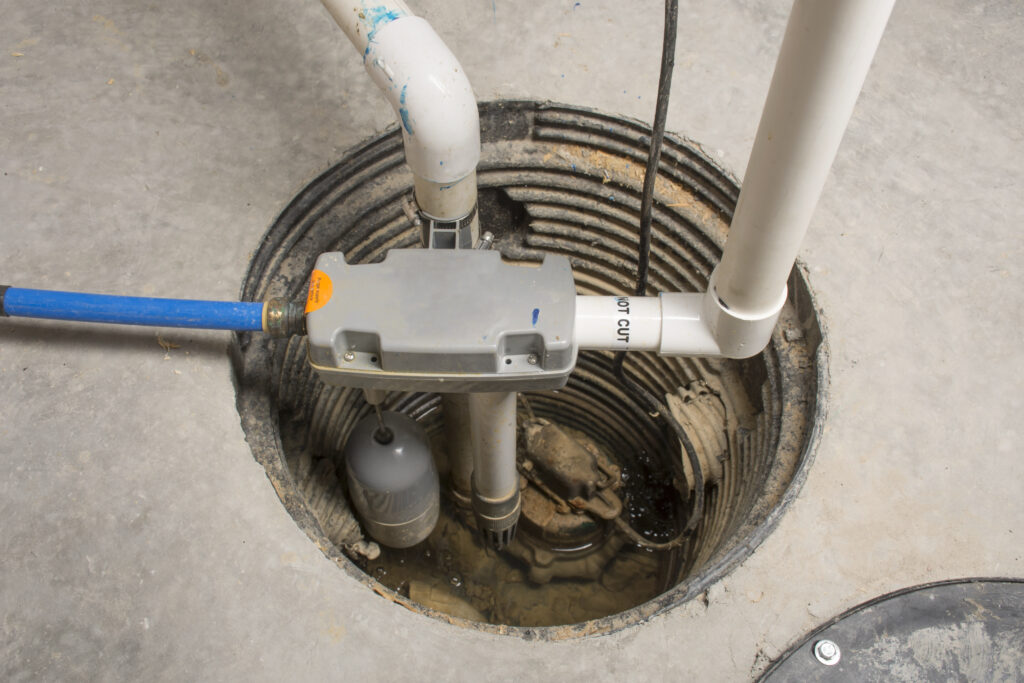
A battery backup sump pump system consists of three components: a deep-cycle battery (typically an AGM or marine deep-cycle battery), a control panel that monitors battery charge and activates the backup pump, and a secondary submersible pump installed in the same pit as the primary pump with its float switch set slightly higher than the primary pump’s activation level.
During normal operation with power available, the primary pump handles all pit drainage, the backup float switch is set above the primary float switch, so the backup never activates unless the primary pump fails to keep up. When power is lost or when the primary pump fails mechanically, the pit water level rises past the primary pump’s float switch (which is now inactive or overwhelmed) and reaches the backup float switch, which activates the battery-powered pump. This happens automatically, within seconds, without any human intervention.
The control panel, typically mounted on the pit wall above the pumps, monitors battery charge continuously and runs the primary pump through an alarm sequence before the battery reaches a critically low charge. Some systems include water-level alarms that notify homeowners when the backup pump is actively running, providing early warning that the primary pump has failed during a storm. Our sump pump repair technicians install and test complete systems to confirm all components function correctly together before any service call is closed.
Battery Backup Capacity: How Long Will It Actually Protect Your Home
Battery backup capacity is the specification that matters most for Northwest Houston storm season planning. A fully charged deep-cycle AGM battery in a properly maintained backup system provides approximately 8 to 12 hours of continuous pumping under moderate groundwater infiltration conditions. Measured in volume, most residential battery backup systems are rated for 20,000 to 40,000 gallons on a full charge, which covers the drainage needs of most Northwest Houston residential sump pits through a typical storm event.
Two factors reduce effective run time from rated specifications: battery age and inflow rate. A battery backup battery that has not been tested or replaced in four or five years may hold 60 to 70 percent of its original capacity rather than the full rated charge. Annual load testing, running the backup pump under actual load on battery power for at least 30 minutes, confirms real-world capacity rather than relying on the battery’s apparent surface charge. During extreme storm events with very high groundwater infiltration, inflow can exceed backup pump capacity even at full charge. Knowing your home’s approximate groundwater infiltration rate helps size the appropriate backup system.
Types of Battery Backup Sump Pump Systems
DC Deep-Cycle Battery Backup Systems
DC battery backup systems use a 12-volt deep-cycle marine or AGM battery charged by a trickle charger connected to household power. These are the most common type and the most versatile, they work regardless of municipal water pressure and provide the most predictable run time. Battery capacity is clearly rated in amp-hours, and replacement batteries are widely available. The primary maintenance requirement is annual testing and battery replacement every three to five years.
Water-Powered Backup Systems
Water-powered sump pump backup systems use municipal water pressure to create a venturi effect that ejects water from the sump pit without any battery, motor, or electrical connection. Advantages: no battery maintenance, no risk of battery depletion, completely automatic. Disadvantages: they consume municipal water during operation (typically at a ratio of 1 gallon municipal water per gallon of pit water ejected), require consistent municipal water pressure to function, and may be impractical during events that also disrupt water pressure.
Combination Primary and Backup Systems
Combination systems integrate a primary AC-powered pump and a DC battery backup pump in a single housing designed for a standard pit. These units are space-efficient and include monitoring displays that show both primary pump operation status and battery charge level simultaneously. For pits with limited space or where two separate units would be difficult to install, combination systems provide complete protection in a single installation.
A Generator Is Not a Complete Substitute for Battery Backup
Whole-home standby generators are excellent investments for extended outage protection across all household functions, HVAC, refrigerators, lighting, and medical equipment. For sump pump protection specifically, a generator addresses power loss but introduces two vulnerabilities that a battery backup system does not: it requires fuel to be available and replenished, and it typically requires a manual start or transfer switch operation before it begins powering the sump circuit.
During the first moments of a power outage, before a generator is started and warmed up, the sump pump has no power. If the pit was already near its activation level, those first minutes without power can allow the pit to fill and overflow before the generator is operational. A battery backup system bridges this gap seamlessly: it activates within seconds of power loss with zero human intervention. The ideal combination for Northwest Houston storm season is a battery backup sump pump for automatic immediate protection plus a generator for extended multi-day outage coverage. For more on how sump pump components affect performance, see our blog on check valve behavior and sump pump cycling.
When to Schedule Battery Backup Installation
The optimal installation window is April through May, before peak hurricane season arrives in August and September. Scheduling during this window provides three advantages: installation availability before seasonal demand peaks, time to test the completed system before the first major storm of the season, and adequate time to identify and address any primary pump issues discovered during the installation inspection.
If you are reading this during July, August, or September, schedule as soon as possible, storm season is active and a system installed this week protects your home starting immediately. Battery backup installation is a straightforward service call for our licensed team, typically completed in a few hours including testing.
Frequently Asked Questions About Battery Backup Sump Pumps in Northwest Houston
What is a battery backup sump pump and how is it different from my primary sump pump?
A battery backup sump pump is a secondary pump installed in the same sump pit as your primary pump, powered by a deep-cycle battery rather than household electrical current. It activates automatically whenever the primary pump fails, is overwhelmed, or loses power. Power outages are exactly when your primary pump fails during the storms that make sump pump protection most critical. The two systems operate independently, with the backup taking over the moment the primary cannot continue.
What happens to my primary sump pump when the power goes out during a Northwest Houston storm?
Your primary sump pump stops completely the moment power is interrupted. It makes no difference how new, powerful, or recently serviced the unit is, without electricity, it cannot run. Hurricane Beryl revealed this vulnerability for millions of Northwest Houston homeowners in 2025: the storm that knocked out power to 2.7 million residents was also generating the flooding conditions that made sump pumps most urgently needed. Without backup power, the pit fills unprotected throughout the outage.
How long does a battery backup sump pump run on a single charge?
A fully charged backup battery typically provides 8 to 12 hours of continuous pumping operation under moderate conditions. Measured in volume, most battery backup systems can pump 20,000 to 40,000 gallons on a single charge, sufficient to manage most residential flooding events. Run time decreases with heavier inflow rates. Battery capacity decreases with age; units over three to five years old should be tested annually to confirm they hold their rated charge under actual load conditions.
How much water can a battery backup sump pump handle per hour?
Most residential battery backup sump pumps are rated for 1,000 to 2,000 gallons per hour at the typical head height found in Northwest Houston sump installations. This is generally adequate for managing groundwater infiltration during storm events in most residential sump pits. Homes in particularly low-lying areas or with very high groundwater infiltration rates should discuss specific capacity requirements with a licensed plumber before selecting a backup unit.
Can a whole-home generator replace a battery backup sump pump?
A generator can power a primary sump pump during a power outage, but the two systems have an important practical difference. A generator requires fuel, manual starting in most residential installations, and a transfer switch to power the sump circuit. A battery backup sump pump activates automatically the instant power is lost, requires no human intervention, and works during the first moments of an outage before a generator can be started. Battery backup and a generator complement each other rather than one replacing the other.
What types of battery backup sump pump systems are available?
The two main types are DC battery backup systems and water-powered backup systems. DC battery systems use a deep-cycle marine or AGM battery and are the most common type, working anywhere regardless of water pressure. Water-powered backup systems use municipal water pressure to eject pit water through a venturi mechanism without any battery, they consume tap water in operation and require adequate municipal water pressure to function. Water-powered backups work well for homes with reliable municipal supply where battery maintenance is a concern.
When should the battery in a backup sump pump system be replaced?
Most manufacturers recommend testing the backup battery annually and replacing it every three to five years regardless of apparent condition. A backup battery that has never been needed may appear to hold a charge but have significantly reduced capacity when it is actually needed. Annual load testing, running the backup pump on battery power under actual load, confirms real-world capacity. A battery that cannot sustain the pump for at least four to six hours under load warrants replacement.
Can a battery backup system be added to my existing sump pump setup?
Yes. Battery backup sump pump systems are designed to integrate into existing sump pits without replacing or modifying the primary pump. The backup unit sits in the pit alongside the primary pump with its float switch set slightly higher so it only activates when the primary pump fails to keep up. The battery and control panel mount separately on the pit wall or a nearby surface. Installation is a straightforward licensed plumbing service call.
What is a combination sump pump system?
A combination sump pump system packages a primary AC-powered pump and a battery backup pump together in a single integrated unit designed to fit a standard sump pit. The primary pump handles normal operation while the battery backup activates automatically during power failure or primary pump overflow. Combination systems are often more space-efficient than two separately installed units and include a monitoring panel that displays primary pump activity, backup battery charge level, and activation history.
Why does power always seem to go out exactly when flooding is worst in Northwest Houston?
Power failures and flooding peak simultaneously in Northwest Houston for the same reason: major storms. High-wind events during tropical storms and hurricanes knock out overhead power lines at the same time that rainfall creates the greatest flooding risk. The storms large enough to cause extended regional outages, Hurricane Harvey in 2017, Hurricane Beryl in 2025, are precisely the storms that stress residential drainage systems for days rather than hours.
How do I test my battery backup sump pump before storm season?
Disconnect the primary pump from its power source, then pour water into the sump pit until the backup float switch activates. Confirm that the backup pump runs and removes water from the pit. Restore the primary pump power. Run the backup on battery only for 30 minutes and observe whether the battery level indicator shows adequate remaining charge. Perform this test annually in spring before the June through November storm season.
Does a battery backup sump pump require professional installation in Texas?
The battery backup pump unit itself can be placed and connected to an existing sump pit by a mechanically capable homeowner. The electrical connection to charging power for the battery typically requires a licensed electrician or plumber depending on the scope. If the installation involves any changes to the sump pit or discharge plumbing, those elements require a licensed plumber. Professional installation ensures all components work together correctly and the completed system is tested under load before the technician leaves.
What is the Cypress Creek Watershed and why does it matter for sump pump protection?
The Cypress Creek Watershed is the largest drainage basin in Harris County, covering 320 square miles of Northwest Harris County and southern Montgomery County. As development in the watershed converted natural absorption capacity to impervious surface, stormwater runoff reaches drainage systems faster and in greater volume during storms. This increases both the frequency and severity of flooding events throughout Tomball, Spring, Cypress, and Conroe, exactly the communities that benefit most from reliable sump pump backup protection.
How does a battery backup protect against flooding during extended power outages?
A battery backup system continues to remove groundwater from the sump pit automatically as long as the battery holds charge, typically 8 to 12 hours or more. For extended outages, a generator kept fueled can recharge the battery continuously, providing protection across multi-day events. The backup system also activates when the primary pump fails mechanically during normal operation, protecting the home during any pump failure regardless of whether power is available at the time of failure.
Why should I choose Edmond’s Rooter-Man Plumbers for battery backup sump pump installation?
Edmond’s Rooter-Man Plumbers has served Tomball and Northwest Houston since 1997 with Texas-licensed plumbers, BBB Gold Star accreditation, full general liability and workers’ compensation insurance, and 24/7 emergency availability. We assess your existing sump pit, recommend appropriately sized backup systems for your groundwater infiltration rate, handle all plumbing connections, and test the completed installation before leaving. Schedule before storm season fills our calendar. Call 281.351.4422 today.
Protect Your Home Before the Next Storm, Call Edmond’s Rooter-Man Plumbers
Every major storm that has extended power outages across Northwest Houston serves as a reminder that primary sump pump protection is only as reliable as the power grid it depends on. Hurricane Beryl demonstrated what extended outages look like in this region. A battery backup sump pump system is the straightforward, durable answer to the timing problem that primary pumps cannot solve. Edmond’s Rooter-Man Plumbers installs, tests, and maintains battery backup sump pump systems throughout Tomball and Northwest Houston, backed by nearly 30 years of service, Texas licensing, BBB Gold Star accreditation, and 24/7 emergency availability.
Call 281.351.4422 for battery backup sump pump installation. Visit Contact Us. Edmond’s Rooter-Man Plumbers, protecting Northwest Houston homes since 1997.