

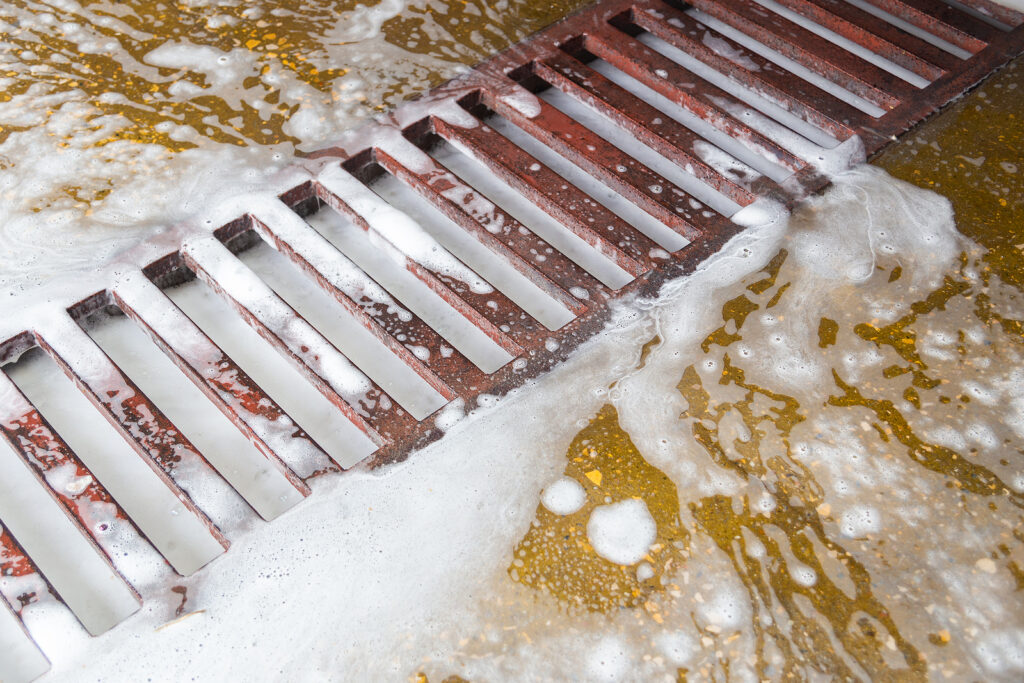
Why Your Floor Drain Backs Up Into the Garage or Utility Room During Rain
Your garage or utility room floor drain backs up during heavy rain, and the water that comes up is not clean. This is one of the most misunderstood plumbing events Northwest Houston homeowners experience, and it is directly tied to the region’s storm drainage infrastructure, not a failure of your own plumbing. Houston averages 50 to 70 heavy rain days per year, and the metropolitan area’s average elevation of approximately 43 feet gives gravity-fed sewer systems minimal grade to move wastewater quickly during large storms. When the Harris County Flood Control District sewer system becomes overwhelmed, backpressure travels from the municipal main through your private sewer lateral to the lowest point in your home, and floor drains are almost always that lowest point. This guide explains exactly why this happens, how to distinguish a municipal backpressure event from a blockage in your own sewer line, and what permanent solutions stop it from happening again.
Experiencing a floor drain backup in your Tomball or Northwest Houston home? Call Edmond’s Rooter-Man Plumbers at 281.351.4422 for drain inspection, hydro jetting, and backflow valve installation. Licensed, insured, available 24/7.
What Actually Happens When It Rains and Your Floor Drain Backs Up
The technical term for this event is sewer surcharge. When the volume of stormwater and wastewater entering the municipal sewer main during a storm exceeds the pipe’s design capacity, the water level inside the sewer main rises above the pipe’s crown. At that point, the pipe is completely full and the sewage has nowhere to go, so the additional volume creates hydraulic pressure that pushes backward toward every home connected to that main. Your home’s sewer lateral, the pipe running from your house to the street connection, becomes a pressure vessel with the municipal system pushing inward instead of your wastewater flowing outward.
Floor drains in garages, utility rooms, and laundry rooms sit lower than any other fixture connected to your drain system. A toilet on the main floor, a shower in a first-floor bathroom, a kitchen sink, all of these drain connections sit at slightly higher elevations than a garage floor drain set into a concrete slab at grade level. When sewer backpressure builds in your lateral, it fills toward the path of least resistance from the lowest elevation upward. The floor drain backs up first. If the pressure event is severe enough, it continues upward to floor-level toilets and shower drains.
The Cypress Creek Watershed, covering 320 square miles and serving as the largest drainage basin in Harris County, sees particularly severe surge events because impervious surface coverage in the watershed grew from approximately 18 percent in 1996 to more than 52 percent by 2018. Stormwater that once absorbed into pastureland now flows rapidly to drainage channels during storms, reaching the sewer system faster and in greater volume than the infrastructure was designed to handle. This is a regional condition that has intensified over decades, not a defect in your home’s plumbing.
Municipal Backpressure vs. Your Own Sewer Line Blockage: How to Tell the Difference
Not every floor drain backup during rain comes from the municipal system. A partial blockage in your private sewer lateral, from root intrusion, grease accumulation, or an offset joint, can also cause a backup that rain conditions trigger or worsen. The distinction determines whether the immediate fix is a backflow prevention device or a sewer line repair, and whether there is a potential claim to make to the municipal utility.
- Municipal backpressure signature: Only the lowest fixtures in the home back up. The floor drain or the lowest toilet shows backup while upstairs bathrooms drain normally. The backup clears relatively quickly once rain stops and the municipal system drains. Multiple neighbors on the same street report the same event during the same storms.
- Private line blockage signature: Multiple fixtures back up simultaneously, including higher-elevation fixtures. The backup may occur or worsen even without rainfall. Neighbors on the same street did not experience the same backup. Camera inspection reveals root intrusion, offset joints, or grease accumulation within the private lateral.
A licensed plumber can confirm the distinction with camera inspection of your sewer lateral after clearing. This inspection is always the appropriate next step after a floor drain backup, because many homes experience both conditions simultaneously: a municipal backpressure event that overwhelms a private lateral already partially compromised by root intrusion or grease accumulation. Our drain cleaning and sewer line repair services address both the cleaning and structural repair that reduces future backup risk.
Backflow Prevention Valves: The Permanent Solution
A sewer backwater valve, also called a backflow preventer, is a one-way valve installed in your main sewer lateral that allows sewage to flow out of your home normally but closes automatically when the pressure direction reverses. When the municipal sewer system surcharges during a storm, the valve’s internal flap closes under the reverse pressure and physically blocks contaminated water from entering your home through the lateral. It reopens automatically when normal gravity flow resumes.
Installation involves locating and excavating access to the main sewer lateral near the foundation wall, cutting the pipe at the correct location, and installing the valve assembly with access for future cleaning and maintenance. This is a permitted plumbing installation requiring a Texas-licensed plumber. Harris County and the City of Houston have periodically offered subsidized backwater valve programs for qualifying homeowners, the Harris County Flood Control District maintains information about current program availability.
- Who benefits most from a backwater valve: Homes that experience floor drain or fixture backups during multiple storm events per year, homes in lower-lying areas of the Cypress Creek Watershed, homes with garages or utility spaces that have experienced sewage cleanup events, and homes where lower-level living or storage space would be directly damaged by sewage backup.
- What a backwater valve does not do: A backwater valve does not address root intrusion, grease blockages, or structural damage within your private sewer lateral. It protects against municipal backpressure only. If your sewer line has a partial blockage contributing to the backup, that condition still requires professional cleaning or repair.
Why Hydro Jetting Your Sewer Line Reduces Backup Vulnerability
Even if your floor drain backup is primarily caused by municipal sewer backpressure, the condition of your private sewer lateral directly affects how vulnerable your home is to that backpressure. A clear, open lateral with full pipe diameter requires more pressure to push backward than a lateral narrowed by 30 to 50 percent from root growth, grease coating, or mineral scale. Professional hydro jetting, high-pressure water at 3,500 to 4,000 PSI that scours the pipe interior and removes the accumulation that reduces your sewer line’s capacity to resist backpressure. For Copperfield and Fairfield homes with 1980s cast iron sewer infrastructure and established tree canopy driving root intrusion, annual drain cleaning provides meaningful protection against storm-season backup events.
Safe Handling After a Sewage Backup
Sewage backup through a floor drain introduces Category 3 black water, classified by the EPA as highly contaminated water containing pathogens including bacteria, viruses, and protozoa. Standard tap water cleanup approaches are not sufficient.
- Personal protective equipment first: Put on waterproof gloves, rubber boots, eye protection, and a mask before entering any area with sewage exposure.
- Remove standing water: Use a wet-dry vacuum to remove sewage water from the affected area. Do not use a mop, which spreads contamination rather than removing it.
- Dispose of porous contaminated materials: Cardboard boxes, fabric items, and other porous materials that made contact with sewage cannot be adequately decontaminated and should be bagged and disposed of.
- Disinfect all hard surfaces: Clean hard floors and surfaces with an EPA-registered disinfectant specifically rated for sewage contamination.
- Document everything before cleanup: Photograph the backup, the extent of contamination, and any damaged materials before cleanup begins. This documentation is required for homeowners insurance claims if you have a water backup endorsement.
- Contact your insurer: Standard Texas homeowner policies do not cover sewage backup without a specific water backup endorsement. Contact your insurer to confirm coverage before engaging remediation services.
Frequently Asked Questions About Floor Drain Backup During Rain
Why does my floor drain back up specifically when it rains?
When heavy rain enters the Harris County sewer system faster than it can flow to treatment facilities, the main sewer line fills completely, a condition called surcharge. The resulting backpressure travels toward the lowest connected fixtures in your home. Floor drains and below-grade bathrooms sit lower than any other fixture in the house, making them the first, and often only, entry point for municipal sewer backpressure during a storm.
Is a floor drain backup during rain a sign of a serious plumbing problem?
A floor drain backup that occurs exclusively during heavy rain and clears when the rain stops typically indicates municipal system backpressure rather than a private line blockage. While the backup itself is alarming, it confirms your sewer line is connected and functioning, the problem is that the municipal system is overwhelmed. A professional inspection distinguishes municipal backpressure from a partial home sewer line blockage that rain pushes over the threshold.
What is sewer surcharge and how does it reach my garage floor drain?
Sewer surcharge occurs when the volume of stormwater and wastewater entering the municipal sewer main exceeds the pipe’s design capacity and the water level rises above the pipe’s crown, creating pressure. This pressurized system pushes sewage backward through every connected service line toward the lowest available opening in each home, which in most Northwest Houston homes with attached garages is the garage or utility room floor drain.
How do I tell if my backup is from municipal backpressure vs. my own sewer line blockage?
Municipal backpressure specifically affects the lowest fixtures in the home, a floor drain or lowest toilet, while upper-level fixtures drain normally. A blockage within your private sewer line produces backups across multiple fixtures simultaneously and may occur independently of rainfall timing. A plumber can confirm the distinction with a camera inspection of your main sewer line after clearing, which reveals root intrusion, offset joints, or blockages that increase vulnerability during storms.
Can I use my household drains normally when my floor drain is backing up?
No. When sewage is actively backing up through a floor drain, every gallon you add to your drain system increases the volume of contaminated water entering your home. Avoid all fixture use, toilets, sinks, showers, laundry, and dishwasher, until the backup clears completely and the floor drain no longer shows active reverse flow. Using fixtures during a backup extends the contamination event and increases cleanup scope significantly.
What is a backflow preventer valve and would it stop my floor drain backup?
A sewer backflow preventer, also called a backwater valve, is a one-way valve installed in your main sewer lateral that allows sewage to flow out of your home normally but closes automatically when sewer pressure reverses. When the municipal system surcharges during a storm, the valve closes and physically blocks contaminated water from entering your home. Harris County and Houston Public Works have periodically offered subsidized backwater valve programs for qualifying homeowners.
Where is a sewer backflow preventer typically installed in a Cypress or Tomball home?
A sewer backflow preventer is installed in the main sewer lateral, the pipe connecting your home’s internal drain system to the municipal sewer main, typically within a few feet of where the lateral exits through the foundation or exterior wall. Installation requires excavating access to the lateral at that location, cutting the pipe, and fitting the valve assembly. This is a permitted plumbing installation requiring a licensed plumber in Texas.
Can I install a backflow preventer myself on my garage floor drain?
Individual floor drain backflow preventers are available at hardware stores and provide limited protection for a single fixture. They do not protect other vulnerable fixtures in the home and may not provide the reliability of a main line backwater valve. A main sewer line backwater valve installed by a licensed plumber protects every fixture in the home simultaneously and is the more comprehensive, durable solution for Northwest Houston homes that experience repeated storm-related backups.
What should I do to clean up safely after sewage backs up through a floor drain?
Sewage backup is classified as Category 3 black water, the most contaminated water category, and poses direct health risks from bacterial and viral pathogens. Wear waterproof gloves, rubber boots, and eye protection before entering the area. Remove standing water with a wet-dry vacuum. Dispose of any porous materials that made contact with sewage. Disinfect hard surfaces with an EPA-registered disinfectant. Photograph all damage before cleanup for insurance purposes.
Why do Northwest Houston homes experience floor drain backups more often than homes in other Texas cities?
Houston averages 50 to 70 heavy rain days per year, and the metropolitan area’s average elevation of approximately 43 feet provides minimal gradient for gravity-fed sewer systems to move wastewater quickly during large rainfall events. As the Cypress Creek Watershed’s impervious surface coverage increased from 18 percent in 1996 to over 52 percent by 2018, stormwater that once absorbed into soil now reaches the sewer system rapidly during storms, creating the backpressure conditions that cause floor drain backups.
Will hydro jetting my main sewer line prevent floor drain backups during rain?
Hydro jetting removes blockages, grease accumulation, and root masses from your private sewer lateral, which reduces the contribution of any pre-existing partial blockage to the backup. A clean, clear sewer lateral handles the pressure reversal from a surcharging municipal main for longer than a partially blocked one. Jetting will not eliminate backups caused purely by municipal system overload, but it removes the compounding factor of home-side blockage that makes otherwise tolerable backpressure become an active backup.
Does homeowners insurance cover sewage backup through a floor drain in Texas?
Standard Texas homeowner policies do not cover sewage backup. Coverage requires a specific water backup and sump pump overflow endorsement, a separate rider. Contact your insurer about adding this endorsement before the next storm season. If you already have the endorsement, document all damage with timestamped photos before any cleanup and contact your insurer before beginning remediation work.
What long-term solutions prevent floor drain backup during heavy rain in Northwest Houston?
The most effective permanent solutions are: a professionally installed main sewer line backwater valve that closes automatically during municipal system surcharge; hydro jetting to remove all blockage contributions from the private lateral; camera inspection to identify structural sewer line conditions like root intrusion or offset joints that increase vulnerability; and sump pump systems for below-grade utility spaces that can manage water that enters before causing significant damage.
Why do garages back up through the floor drain but toilets seem fine during a storm?
Garage floor drains typically sit several inches lower than the drain connections for toilets, sinks, and showers on the main floor of the house. Municipal sewer backpressure travels upward from the sewer lateral into the home and fills fixtures from the lowest point upward. A moderate backpressure event produces a visible floor drain backup while the hydraulic head is not yet high enough to reach the slightly higher elevation of a toilet. This explains the floor-drain-only backup pattern during moderate storms.
Why should I call Edmond’s Rooter-Man about my floor drain backup?
Edmond’s Rooter-Man Plumbers has served Tomball and Northwest Houston since 1997 with Texas-licensed technicians, BBB Gold Star accreditation, and full insurance coverage. We inspect sewer lines with camera equipment to determine whether your vulnerability is from municipal backpressure alone or from a contributing home-side blockage, and we install backflow preventer valves to provide the permanent protection Northwest Houston storm seasons demand. Call 281.351.4422 for floor drain backup inspection and service.
Stop the Floor Drain Backup Cycle, Call Edmond’s Rooter-Man Plumbers
A floor drain that backs up every storm season is not something to simply clean up and accept. Every sewage intrusion event damages the affected area, creates mold risk in Northwest Houston’s humid climate, and represents a situation that a licensed plumber can address permanently. Edmond’s Rooter-Man Plumbers provides sewer line camera inspection, hydro jetting, and backwater valve installation backed by nearly 30 years of service to Tomball and Northwest Houston, Texas licensing, BBB Gold Star accreditation, and 24/7 emergency availability.
Call 281.351.4422 for floor drain backup inspection and permanent solutions. Visit contact us. Edmond’s Rooter-Man Plumbers, serving Tomball and Northwest Houston since 1997.